Milk Spoils in Hours. The Data That Prevents It Was Available All Along.
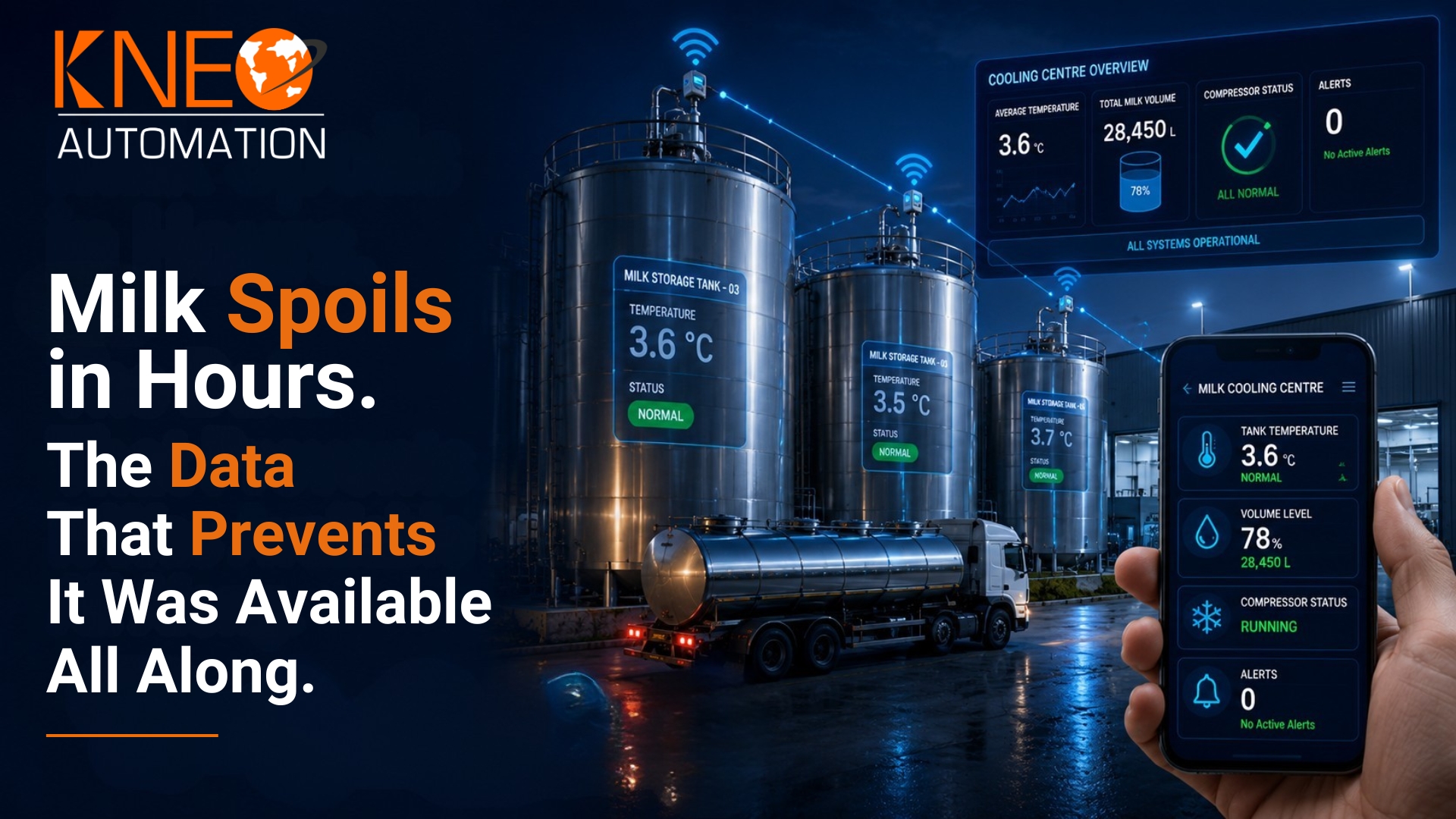
It is 2am. A compressor in a bulk milk cooling tank has been running at reduced efficiency for three hours. The tank temperature is creeping upward. At a dairy farm, this is a quality event. At a bulk collection centre, it is a revenue event. Nobody knows it is happening.
The Hidden Cost of Distributed Operations Without Visibility
This is the reality of managing distributed process assets without remote monitoring. The people accountable for the outcome are not in the building where the outcome is being determined. A cooling tank that reaches the wrong temperature does not just fail a quality check. It triggers a cascade: rejected product, revenue loss, compliance exposure, and supply chain disruption — all from a compressor fault that a temperature sensor could have flagged three hours earlier. The cooling equipment was never the problem. The absence of visibility was.
What Remote Monitoring Actually Changes
When sensors were connected across the cooling centre network - feeding PLCs, HMIs, and cloud dashboards in real time - the change was immediate and practical. The manager who previously drove to three sites on Sunday morning to physically check tank temperatures stopped driving. Not because the responsibility changed, but because the information was now available from a phone at 7am before the morning coffee. The 60% reduction in inspection costs was not forecast by a consultant. It was the natural consequence of people realising they no longer needed to be present to be informed.
The 30% Revenue Figure Deserves Explanation
Revenue improvements from operational monitoring sound abstract until you trace the mechanism. Less spoilage means less rejected product. Less rejection means more product completing the supply chain. Consistent quality means the ability to negotiate and hold premium pricing positions. These outcomes are not dependent on the facility getting better at dairy. They are dependent on the facility getting better at seeing what the facility is actually doing. The pilferage tracking that became possible through volume monitoring was, as one plant manager described it, a discovery nobody wanted to make but everyone needed.
The Broader Lesson for Process Industries
A bulk milk cooling network is a specific example of a universal pattern. The same visibility gap exists in cold chain logistics, water treatment facilities, remote energy installations, and any other process environment where equipment operates unattended and decisions need to be made faster than physical inspection allows. The technology to close this gap has been commodity-level for years. What has been missing, in most cases, is the decision to connect it.
Visibility does not require a large capital investment. It requires connecting what you already have to someone who can see it. www.kneo.in