When a Customer Calls With a Quality Problem, How Long Does It Take You to Find the Answer?
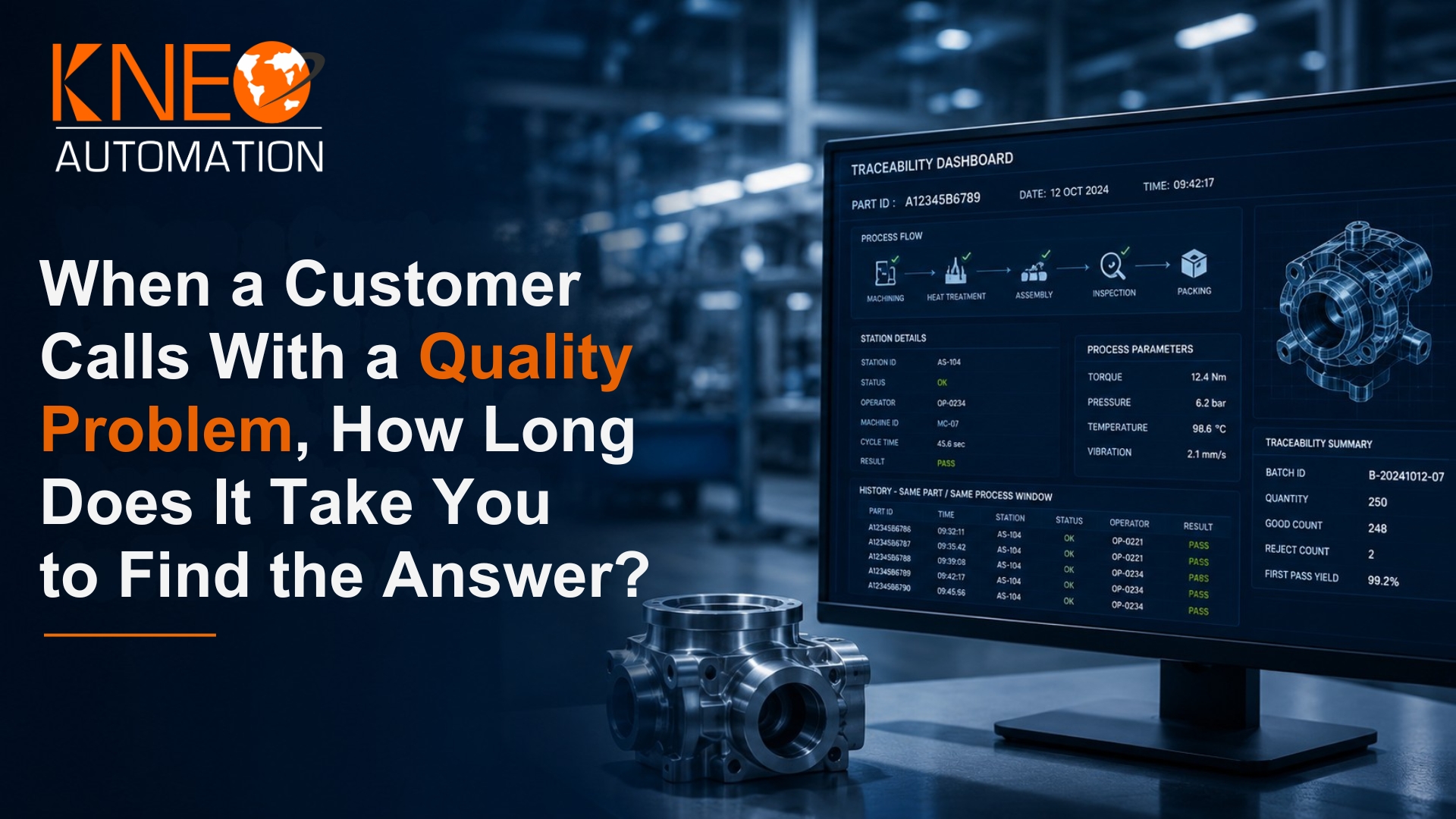
Monday morning. 9:15am. A customer quality engineer is on the phone. The part in question shipped three weeks ago. The question is specific and immediate: what was the process status at the assembly station for that part number, on that date, on that shift?
The Manual Answer
In most manufacturing plants, this question sets off a search. The quality team locates the paper traveller for the batch - if it has been filed correctly. They find the shift log for that date - if it exists and if the date matches the shipping record. They identify which operator ran the relevant station during the shift in question - assuming the attendance records and the shift assignments are both accessible. They look at what the operator entered as a reason code - assuming they entered anything meaningful rather than a generic category. This process, in a well-organised plant, takes a few hours. In a plant under normal operational pressure, it takes longer. The answer, when it arrives, is often approximate. And in the meantime, the customer is forming an impression of your quality system based on how long the answer is taking.
The Digital Answer
Full process traceability changes the nature of this conversation entirely. The part has a unique identifier - a barcode or a direct part mark applied at the start of its production journey. Every interaction between that identifier and a production station has been logged: the timestamp, the process parameters, the operator, the machine state, the outcome of any in-process checks. The query takes seconds. The answer is complete and verifiable. And the follow-on query - every other part that passed through the same station, in the same parameter window, on the same shift - takes equally few seconds. If the issue is systemic, the scope of the problem is immediately known.
The Business Case for Traceability Is Not About Being Audited
Most companies implement traceability because a customer requirement or an IATF audit demands it. This is a valid starting point but a limited frame for the value. A complete part-level process record is simultaneously a root cause analysis tool, a warranty liability management tool, a supplier performance evidence base, and a recall boundary-setting capability. The customer who receives a clear, data-supported answer to a quality concern within an hour does not just have their question answered. They have evidence about the kind of quality system they are dealing with. Trust, in manufacturing supply chains, is built one response at a time.
Where Most Plants Are on the Traceability Journey
4M traceability - tracking Man, Machine, Material, and Method at the individual part level - is not a capability reserved for the largest or most technologically advanced manufacturers. The barrier is not cost. Current technology makes this achievable for mid-size facilities at investment levels that are justified by a single prevented recall. The barrier is the decision: to connect the systems that hold the relevant data, to standardise the part identification method, and to build the process discipline that keeps the records accurate. The plants that have made this decision are operating with a capability gap over their competitors that grows wider every year.
Traceability is not a compliance requirement. It is an operational advantage. www.kneo.in